
This case study is password protected
Don't have it? Reach out at yl.yuxuanli@gmail.com
Incorrect password. Try again.
← Back to workAs the end-to-end design owner, I helped define how AI, customers, and bookkeeping experts work together, from understanding the state of the books to resolving issues and getting expert guidance when it matters.
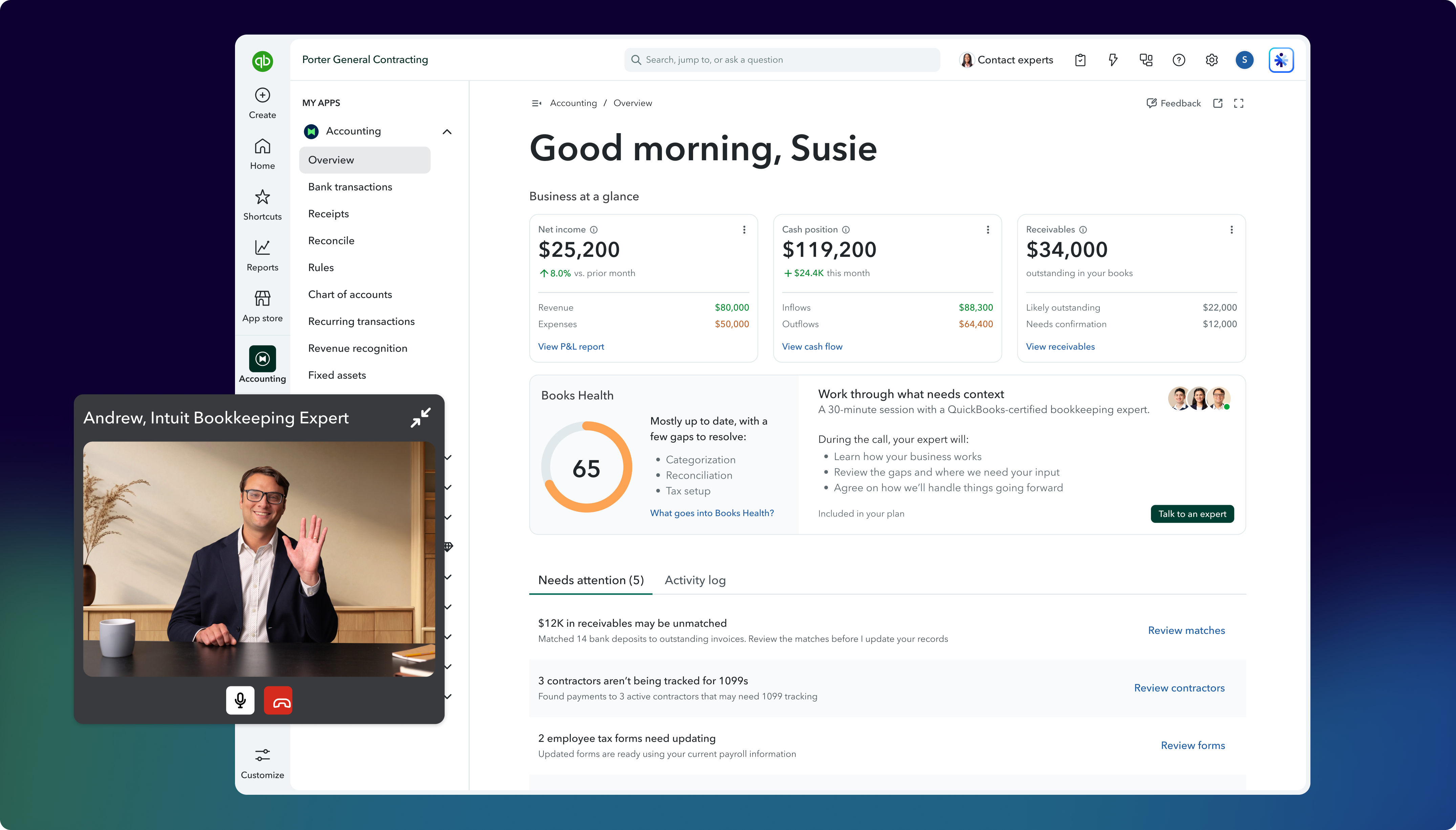
We were designing a new bookkeeping service without an established interaction model. We didn’t yet know how AI and human expertise should work together, when customers would trust AI to act, or when they would want a person involved.
The challenge was to define a service model that could build trust progressively, use human judgment where it mattered, and let AI take on more work over time.
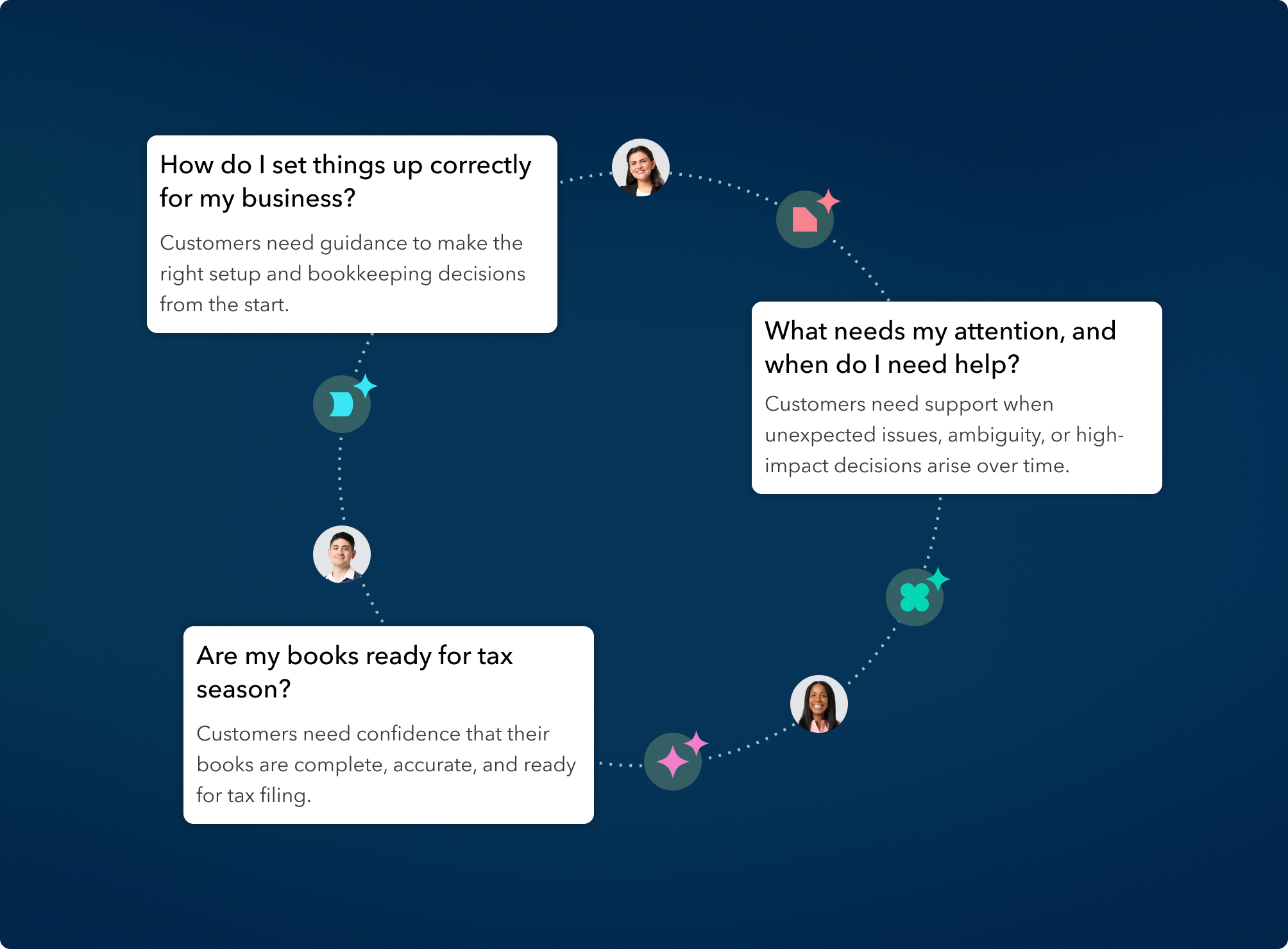
I mapped the bookkeeping journey through research and working sessions to see where customers struggled and what triggered the need for support. The challenge wasn’t simply choosing between AI or human help. Different moments called for different levels of guidance, context, and professional judgment.
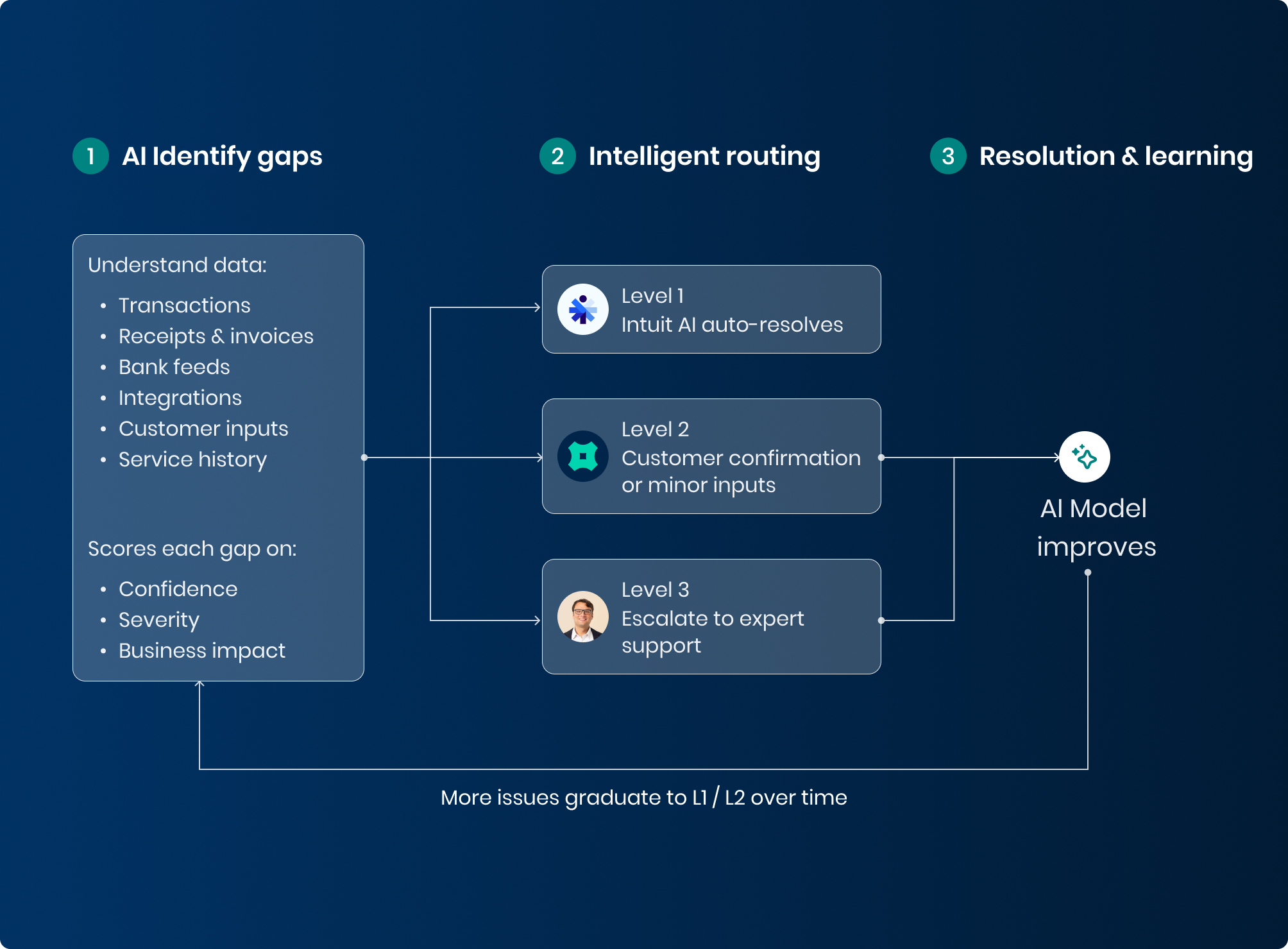
With those moments mapped, the next question was who should help and when. I worked across product, engineering, data, and expert teams to understand what AI could reliably handle and where human judgment added the most value. Together, we shaped a model where AI acts when confidence is high, and customers or experts step in when context or judgment matters.
I designed the overview page to help customers quickly see the state of their books and what needed attention. When the Books Health score signaled a gap, AI explained why, and an expert could shape a personalized AI + human support plan.
As customers built trust in the experience, AI took on more of the ongoing work. It handled routine tasks and questions, and flagged when human judgment would add value, bringing in an expert with full context.
Designing AI experiences is as much about defining responsibility as designing interactions.
The hardest part wasn’t deciding what AI could do, but when it should act, when it should ask for context, and when human judgment should take over. Defining those boundaries became just as important as designing the experience itself.